
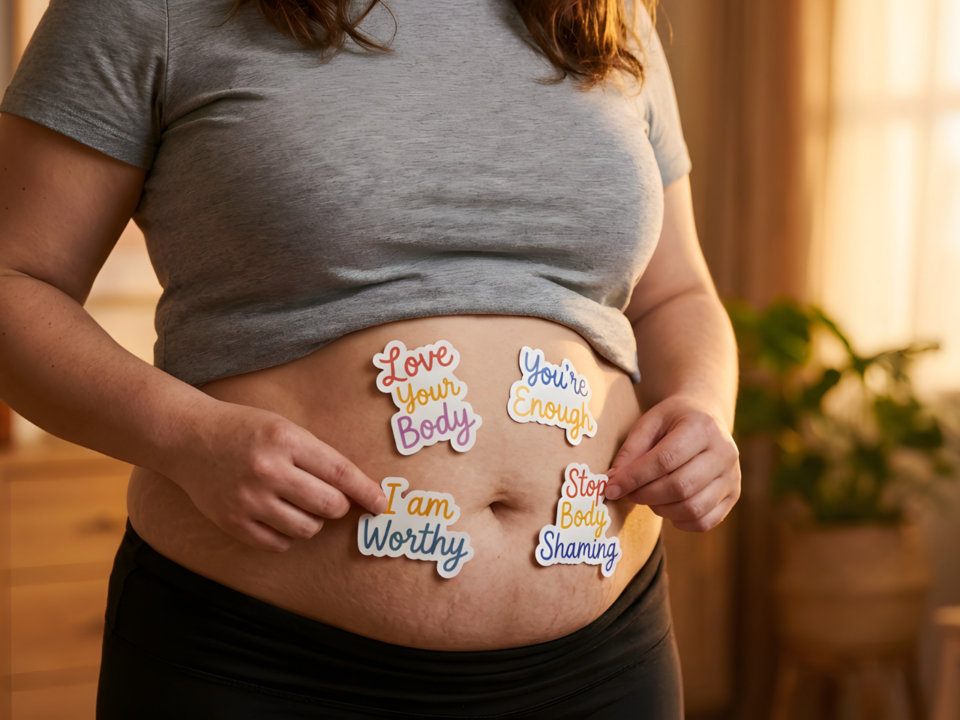
Becoming a parent doesn’t just change your daily life—it reshapes how you see yourself. Even in the glow of a wanted, healthy pregnancy, many new parents find themselves quietly grieving—missing the body they knew, the independence they once had, and the version of themselves that felt familiar. In a culture that celebrates “bounce back” transformations, that grief can feel confusing or even shameful. But it’s also deeply human—and worth talking about.
Amy Lowe, a therapist and director at a women’s center, says they serve women with postpartum depression quite a bit. They also serve women with feelings of being overwhelmed, a sense of pressure around how to do it all, and a struggle to abandon self care in order to keep up.
Postpartum depression can come from a variety of reasons, including the neurochemical or hormonal impact or imbalances of pregnancy, the loss of the experience of the child in the womb, and/or undischarged or suppressed grief about the major changes that have just occurred.
“Some mothers hormonally are so on point when they are pregnant and after the delivery, the system sort of crashes because it’s not dedicating all the resources to that life inside,” Lowe states. “Another form of grief can be the loss of the experience of the child in the womb. I had a little bit of that. I had this unexpected episode of deep grief that I would not feel that close to this human ever again. I did not expect it.”
Along with postpartum depression, there is also the clinging to the “me I was before.” Lowe points out that she sees suffering from women who cling to that old version of self and want to get back to who they were before the life-changing moments. “That can be a set up for suffering because it will never be true,” she says.
However, it can open a door to changing the relationship with that story. “What are the aspects of your old self that you love that you’re bringing forward? How are you going to upgrade and evolve now that you’re a mother?” Lowe asks her clients.
Regarding their body, Lowe knows a lot of moms attach their value to how they look and how they’ve been programmed to feel about how looks are their value. She says some new moms have to form new relationships with what health looks like for them and what the value of their body is besides how they look.
Age of Information
In a social-media world portraying the “bounce-back” culture, Lowe says she asks clients what their motive is when it comes to looking to social media. If it is externally driven, like comparing yourself, it can be harmful. If it’s implicitly inspiring, like looking at a woman, a mom, who did something cool and thinking that you can do it too because you know you are capable, and it feels right and good, then Lowe says it can be helpful.
We live in an age of information, and Lowe says that helps us know so much more than we used to. She notes that an unexpected consequence of outsourcing your power to knowledge that comes from a place outside of yourself is that you leave your own knowledge behind—parents become quick to sacrifice their intuition in favor of the latest science or opinion.
The trick to finding your own intuition and leaving behind the doubt is to just do what feels good and right, Lowe acknowledges. She has found in her field that when a parent is separated from what feels right, there is a dissonance that leads to constriction, fear, and insecurity. “When we ask clients to tap into their knowing and bring it into their consciousness, the body feels really full of love and compassion and almost a sense of confidence and clarity.”
Tools to Help
Typical adjustment to postpartum life is characterized by everything being a little off kilter, but having a general sense of the direction you’re going and staying on track with that. If it deviates from that, then it can lead to an adjustment disorder or diagnosed postpartum depression.
“Disordered means that what’s happening is significant enough in my day to day that I’m starting to fall behind. I am starting to struggle in my sense of self. I’m not really keeping up with how I want to as a mom. I’m not able to return to work, or I’m struggling with hygiene,” Lowe explains.
If feeling disordered, Lowe recommends getting blood work done to make sure to rule out any medical explanation such as hormone imbalance. She says especially in the postpartum realm, hormones are quite affected. Additional resources are to seek therapy or a support group.
“But really it is also about normalizing the experience and then giving the emotions permission to be here,” Lowe emphasizes. “A lot of mothers fear the stigma of ‘I’m supposed to be happy, I’m supposed to be excited, I’m supposed to want this and I’m scared to death,’ or ‘My body’s in shock, and I don’t know where to go to not feel judged.’”
Tools that Lowe gives her clients include mindful self compassion, cognitive behavioral therapy, identity work, and mostly just talking. “If someone doesn’t feel their symptoms warrant talking to a therapist, a simple thing a person can do is talk to someone who loves them and cares about them and helps them remember who they are, helps them remember their strengths, helps them remember their goals,
their why.”
Move your body, go for a walk, get good sleep, eat, and drink water. Those things can make a change. If things are sticking around for longer than seven days, it might be something more than a typical adjustment.
“Anything that can be discussed can be healed,” says Lowe. “So just talk about it and know that there is a place to do that. You’re not alone.”